
Transnational education has fundamentally altered the paradigm of higher education in India by removing geographic and economic barriers to global integration. Historically, Indian scholars seeking a prestigious British degree had to navigate the complexities of international migration, cultural displacement, and high cost-of-living adjustments. Today, the emergence of international undergraduate education in Mumbai offers a seamless alternative, enabling students to pursue rigorous UK undergraduate programs locally. By choosing international courses in India, ambitious scholars can access global academic standards without leaving their domestic communities.
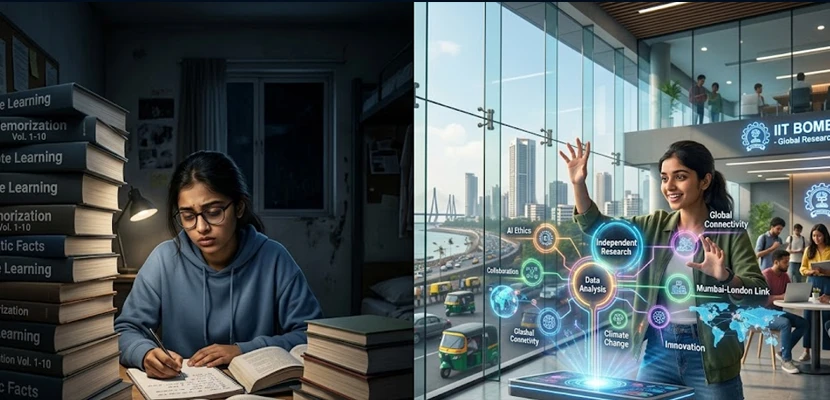
As a premier institution delivering this model, Russell Square International College in Mumbai acts as a crucial academic gateway, bridging local values with global competencies. However, entering this top-notch educational environment requires more than standard academic diligence; it demands a deep cognitive shift. The transition from traditional Indian secondary boards to a modular, enquiry-based British framework introduces a unique set of academic and structural challenges. When students enroll in international courses in India, they are evaluated not on memory, but on their capacity for independent synthesis, critical reasoning, and intellectual integrity.
By pursuing international undergraduate education in Mumbai, students gain early access to global professional networks while maintaining their local connections. This dual perspective is highly valued by multinational employers and top-tier postgraduate institutions worldwide. Through the structured academic support offered at Russell Square International College in Mumbai, students learn to navigate Western academic expectations, transforming transitional challenges into a lifelong professional advantage.
Mistake 1: The Rote-Learning Trap and the Fallacy of Memorization
Indian students transitioning to a UK curriculum often struggle when they rely on rote memorization to pass Western assessments. While Indian boards traditionally reward the precise recall of textbook facts, UK examiners prioritize original synthesis, analytical reasoning, and the practical application of theories to real-world scenarios.

In traditional domestic academic environments, success is often measured by quantitative precision and direct information retrieval. In examinations, reproducing standardized notes or textbook passages verbatim is frequently recognized as a demonstration of high academic competence. When students trained in this system transition to international undergraduate education in Mumbai, they often attempt to apply these same strategies to their UK assignments and examinations. This reliance on rote learning represents a fundamental misunderstanding of the British evaluation framework.
Mistake 2: The Academic Integrity Crisis and Citation Pitfalls
Indian students transitioning to a UK curriculum frequently commit unintentional plagiarism by failing to understand Western academic integrity standards, citation styles, and the critical importance of paraphrasing rather than reproducing textbook text verbatim.
Perhaps the most academically dangerous pitfall for students transitioning to a UK curriculum is a lack of familiarity with Western standards of academic integrity and citation. In many Indian educational settings, sharing notes, utilizing uncredited online summaries, and reproducing verbatim textbook passages are common, culturally tolerated practices that rarely result in severe disciplinary action.
Indeed, some secondary students are even encouraged to memorize and reproduce model essays verbatim to secure high marks on board exams. Consequently, when these students enroll in international undergraduate education in Mumbai, they often carry these highly problematic habits with them, completely unaware of the strict ethical boundaries maintained by international universities.

Mistake 3: The Grade Translation Disconnect
Many Indian students misinterpret UK university grading scales, incorrectly assuming that a score of 60% or 70% represents mediocre performance. In reality, a UK score of 70% or above constitutes an elite First-Class Honours designation, which is highly sought after by global employers and top postgraduate programs.
One of the most persistent sources of anxiety and confusion for Indian students pursuing international undergraduate education in Mumbai is the profound difference between the marking cultures of India and the United Kingdom. In the Indian system, a student scoring 70% is often viewed as average, while elite students routinely target scores in the 90% to 100% range, particularly in quantitative subjects under boards like CBSE.

Mistake 4: The “Ivory Tower” Syndrome and Neglecting Local-to-Global Pathways
Indian students transitioning to a UK curriculum often commit the mistake of isolating themselves in purely academic study, thereby neglecting the networking, professional placement cells, and global mobility initiatives integrated into high-quality transnational programs.
In many traditional Indian higher education contexts, a student’s success is judged almost exclusively by their cumulative grade point average or final percentage. Consequently, students often channel their entire energy into library study, treating extra-curricular activities, guest lectures, student clubs, and global networking opportunities as secondary distractions.
When students enroll in international undergraduate education in Mumbai, they are entering an ecosystem designed to cultivate these exact global competencies. Failing to actively participate in this ecosystem represents a massive missed opportunity.
Such initiatives demonstrate that modern international courses in India are not isolated academic silos; they are dynamic, global experiences that prepare students to operate confidently across international borders. By actively engaging in these co-curricular and global mobility initiatives, students build a powerful global network that serves as a launchpad for their future careers.
FAQ’s
How does the grading system equivalence work between Indian boards and the UK curriculum?
Understanding the grading equivalence is critical for students pursuing international undergraduate education in Mumbai. The marking cultures of the two systems differ significantly, with the UK utilizing a compressed honours classification scale.
Within the top-notch educational environment at RSIC, students are continuously trained to meet the qualitative standards of the UK scale, helping them secure those highly coveted First-Class and 2:1 classifications.
Can students transfer credits or progress globally from Russell Square International College in Mumbai?
Yes, one of the greatest advantages of enrolling in international courses in India at RSIC is the flexible global progression pathways available. Because the undergraduate programs are officially designed and awarded by the University of London, the academic credits earned are globally recognized and fully transferable.
Under the college’s “twinning” and academic transfer models, students have the option to complete their first or second years of study locally in Mumbai and subsequently transfer directly to campus locations in the United Kingdom or other international partner universities to complete their degrees.

Conclusion
Institutions like Russell Square International College in Mumbai play a crucial role in facilitating this transition. By delivering highly prestigious University of London programs within a supportive local framework, the college ensures that students receive a world-class education with personalized academic mentorship, contemporary campus facilities, and extensive career counseling.
Through unique opportunities like the Inward Mobility Program, specialized internship pipelines with global “Big 4” firms, and strong ties with multinational corporations, RSIC provides its students with a distinct global networking advantage, preparing them to lead with purpose, perspective, and cross-cultural confidence in the modern global economy.