
Is the University of London curriculum too difficult for the average Indian student?
The University of London curriculum is academically rigorous and challenging, but it is not too difficult for the average Indian student when pursued through a recognized teaching centre. While the syllabus demands a transition from rote memorization to analytical application, localized academic mentoring, structured progression, and dedicated study resources make these world-class qualifications highly achievable. For students seeking international undergraduate education in Mumbai, institutions like Russell Square International College in Mumbai provide a top-notch educational environment that bridges the pedagogical gap and makes these prestigious international courses in India highly accessible.

Defining the landscape of global higher education in the Indian context
The University of London curriculum, academically directed by elite member institutions such as the London School of Economics (LSE), Royal Holloway, and King’s College London, is highly demanding but entirely viable for Indian students. While standard Indian secondary boards focus on structured content recall, the transition to international undergraduate education in Mumbai is seamlessly facilitated by recognized teaching centres. By choosing a top-notch educational environment such as Russell Square International College in Mumbai, students receive the in-person teaching, continuous assessment, and structural academic guidance necessary to master these highly analytical international courses in India.

The evolution of transnational educational pathways
The globalization of higher education has transformed how families in South Asia approach tertiary learning. Historically, obtaining a prestigious British degree required complete relocation to the United Kingdom, incurring significant financial costs and cultural displacement. However, the rise of recognized teaching centres has enabled the delivery of international courses in India, allowing students to stay in their home country while earning a degree directly from the University of London. This model combines local support with global standards, ensuring that international undergraduate education in Mumbai is structurally equivalent to the programs taught on campus in London.

To support this model, Russell Square International College in Mumbai has spent over two decades developing a top-notch educational environment. Established in August 2004 by the promoters of the École Mondiale World School, the college provides an academic bridge for ambitious students from Mumbai and other parts of India. This framework allows students to study curricula designed and assessed by world-leading institutions, such as the London School of Economics and Political Science (LSE), Royal Holloway, and King’s College London. The result is a rigorous education that prepares students for global careers and postgraduate success.
| Key Institutional Milestones | Strategic Impact on Transnational Education |
| Establishment of RSIC (2004) | Introduced a highly structured pathway for international undergraduate education in Mumbai. |
| Academic Collaboration with LSE | Brought world-class curricula in Economics, Management, Finance, and Social Sciences directly to India. |
| Twinning Transfer Model (2+1) | Created an affordable, flexible route for students to study locally before completing their degree in the UK. |
| Integration of King’s College & Royal Holloway | Broadened the curriculum to include Psychology and specialized Business Administration pathways. |
| Deployment of a Top-Notch Educational Environment | Provided smart classrooms, advanced computer labs, and extensive libraries in Juhu. |
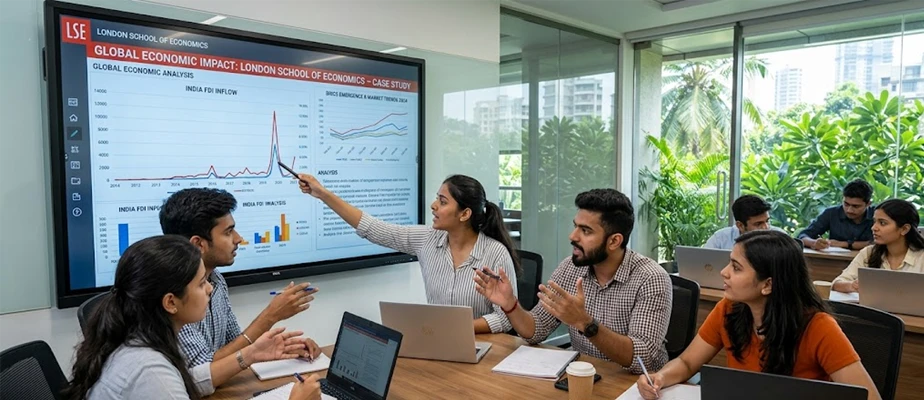
Cognitive mapping of the curricular transition
The table below illustrates how the primary learning expectations shift as a student transitions from local Indian high school boards to the University of London undergraduate curriculum, and how the teaching model at RSIC supports this adjustment:
| Learning Domain | Indian High School Expectation (CBSE/ISC) | University of London Undergraduate Demand | RSIC Local Pedagogical Intervention |
| Information Sourcing | Reliance on single, standardized textbooks with pre-formulated answers. | Sourcing evidence from journals, databases, and extensive reading lists. | Providing access to physical and digital libraries alongside guided research workshops. |
| Problem Solving | Practicing repetitive, predictable mathematical or quantitative templates. | Applying formulas and models to completely unfamiliar, real-world case studies. | Utilizing empirical pedagogy, active problem-solving sessions, and mathematical tutorials. |
| Writing & Composition | Descriptive essays following highly structured, standard patterns. | Analytical, peer-reviewed essays presenting clear, original arguments. | Conducting specialized essay-writing workshops, draft reviews, and structural feedback. |
| Exam Preparation | Intensive revision of past papers containing recurring question formats. | Deep, continuous engagement with the syllabus to handle unexpected exam prompts. | Analyzing examiners’ commentaries, running mock exams, and teaching time-management skills. |
| Academic Autonomy | Highly structured, teacher-led daily schedules with close supervision. | Highly independent study schedules requiring proactive, self-motivated learning. | Offering a personal mentoring framework that monitors progress while encouraging autonomy. |
Pedagogical scaffolding: how RSIC Mumbai converts a challenging curriculum into a manageable journey
Russell Square International College in Mumbai supports students through the rigorous University of London curriculum by providing a top-notch educational environment focused on personal academic attention. RSIC combines in-person, expert-led lectures with small class sizes, regular mock exams, and personalized mentorship, translating independent distance learning into a supportive, collaborative campus experience. This structured approach ensures that students can confidently navigate these demanding international courses in India and successfully complete their international undergraduate education in Mumbai.
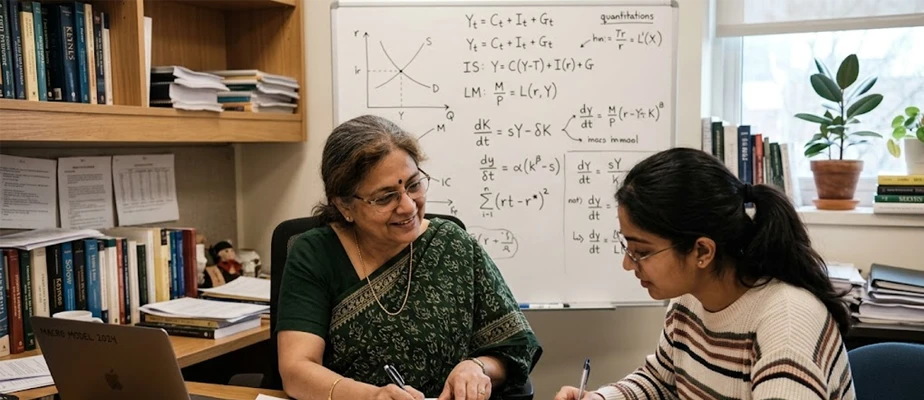
The infrastructure of academic support
While the University of London offers a highly flexible distance learning model, students who study independently often face significant challenges. Managing a complex, LSE-designed curriculum without regular academic support can lead to feelings of isolation and difficulty in interpreting the study materials.
As a Recognized Teaching Centre, Russell Square International College in Mumbai addresses these challenges by surrounding students with a structured, supportive academic community. The college’s educational strategy is built on several key pillars:
- Trained and Approved Faculty: The teaching staff at RSIC are trained and approved in accordance with the University of London’s guidelines, ensuring that local instruction is aligned with global standards. Many faculty members hold or are pursuing doctorates, bringing academic depth to the classroom.
- Active, Empirical Learning: Rather than relying solely on passive lectures, the faculty uses real-world case studies, group discussions, and practical exercises to help students apply abstract theoretical concepts to concrete business scenarios.
- Continuous Assessment and Feedback: To prepare students for the final, high-stakes examinations, RSIC conducts regular tests, mock exams, and review sessions. This continuous feedback loop helps students identify areas for improvement and refine their exam techniques throughout the academic year.
- Small Class Sizes: By maintaining small batch sizes, the college ensures that each student receives personalized attention and guidance from their lecturers, creating a supportive environment where students feel comfortable asking questions.
- Comprehensive Resource Access: Students have access to a well-stocked physical library in Juhu, which is designed to encourage strong reading habits, alongside the University of London’s extensive digital library of over 100 million academic items.
Mapping the academic landscape: leadership and faculty profiles at RSIC
The academic quality of the international courses in India offered at Russell Square International College in Mumbai is maintained by a highly qualified faculty team. Led by experienced academic administrators, RSIC’s faculty members bring rich industry and research experience directly to the classroom, creating a top-notch educational environment. This ensures that students enrolled in international undergraduate education in Mumbai receive the expert guidance necessary to excel under the rigorous academic direction of the University of London.
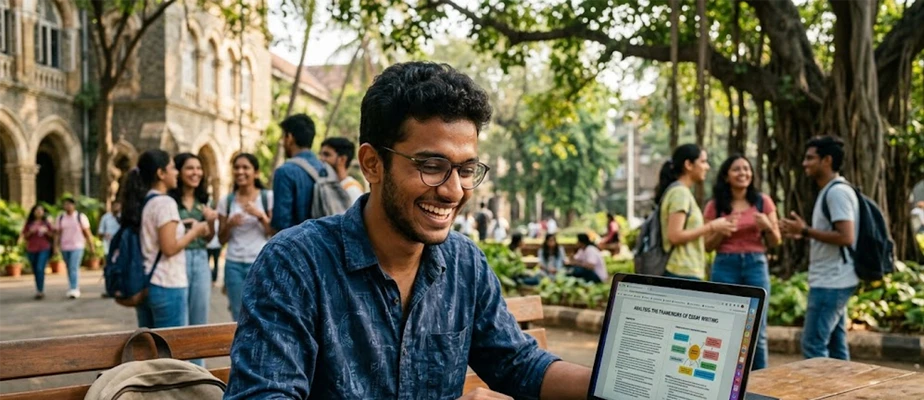
Academic leadership and subject-matter expertise
A key factor in the success of any educational institution is the quality of its leadership and teaching staff. RSIC’s administrative and academic teams are structured to support students through every stage of their undergraduate journey, providing both academic guidance and career support.
The leadership team is responsible for maintaining the college’s strategic vision and ensuring its programs remain aligned with global standards:
- Pradeep Sarda – Chairman, who guides the strategic direction of the institution.
- Ravi Goenka – Vice-Chairman, supporting the college’s long-term growth and international collaborations.
- Rajeev Goenka – Member of the Board of Directors.
- Swati Singh – Principal, who is committed to nurturing academic excellence, integrity, and student well-being across the campus.
The teaching faculty includes experienced professionals and researchers who specialize in the core areas of the University of London curriculum:
- Charushil Tayshete – Assistant Professor and Academic Coordinator, ensuring structural alignment and curriculum delivery.
- Karishma Sachdev and Prof. Neha Sharma – Economics Faculty, guiding students through the quantitative models of microeconomics, macroeconomics, and econometrics.
- Palak Rajani and Prof. Krupa Desai – Finance Faculty, specializing in asset pricing, corporate finance, and risk management.
- CA Rachna Singhvi – Accounting Faculty, teaching international accounting standards and financial reporting.
- Anuri Mehta – Marketing Faculty, focusing on consumer behavior, branding, and digital marketing strategies.
- Naresh Parma – Mathematics & Statistics Faculty, providing the foundational quantitative instruction required for core EMFSS modules.
- Sona Raghuvanshi and Prof. Gaurangi Shirgaonkar – Psychology Faculty, supporting students through King’s College London’s specialized curriculum.
This dedicated academic team provides the structured teaching, regular tutorials, and personalized mentorship that help students navigate the quantitative and qualitative challenges of their programs, preparing them to excel in their final examinations.
The transparent admissions and application process
Applying to study at RSIC is a structured process designed to evaluate a candidate’s academic readiness and motivation:
- Application Submission: Candidates complete the application form, which can be accessed online or downloaded from the official website.
- Academic Verification: Applicants submit copies of their Class 10 and Class 12 marksheets, along with their birth certificate or passport copy.
- Registration Fee Payment: A selection processing fee of ₹10,000 (plus applicable taxes) is paid via check or demand draft.
- Interview and Evaluation: Candidates participate in a personal interview on campus or online. Some quantitative courses may also require a written math assessment.
- Admission Confirmation: Successful applicants receive an official offer letter, confirm their enrollment by paying the course fees, and complete their registration with the University of London.
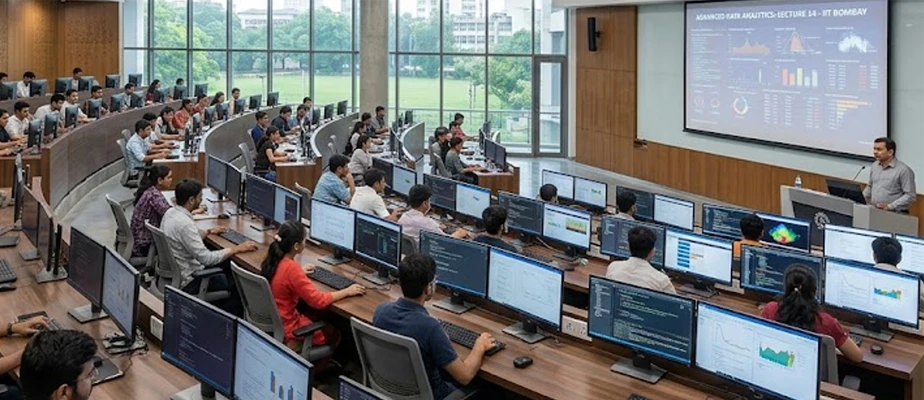
Conclusion:
The academic data, faculty profiles, and student testimonies analyzed in this report show that the University of London curriculum is academically demanding, but it is not too difficult for the average Indian student when pursued through a recognized teaching centre. The rigor of the curriculum—academically directed by elite institutions like LSE, Royal Holloway, and King’s College London—is precisely what gives the degree its global prestige and makes it a valuable credential for ambitious students. The challenge does not stem from a student’s lack of intellectual capacity, but from the transition from a highly guided secondary school system to a model that values independent, critical analysis.
This transition is successfully managed by choosing to study in a supportive local environment. By selecting a top-notch educational environment such as Russell Square International College in Mumbai, students receive the in-person teaching, continuous assessment, and personalized mentoring required to build confidence and academic competence.
This localized approach allows families to pursue highly regarded international courses in India in a cost-effective manner, while preserving flexible pathways for international study through the 2+1 twinning transfer model and the LSE General Course. Ultimately, the program prepares students to navigate a challenging academic curriculum and build a strong foundation for successful, global careers.