
The Psychology Pivot: Why a King’s College-Directed BSc is Superior to a Local BA Psychology
The global educational landscape for the behavioral sciences has reached a critical evolutionary junction, transitioning away from historical, speculative humanities frameworks toward rigorous, empirically driven life sciences. Historically, higher education in India has placed behavioral studies within the liberal arts faculty. This structural placement led to the dominance of the local BA Psychology, a degree that traditionally focuses on historical theories, qualitative descriptions, and philosophical inquiries into human behavior.
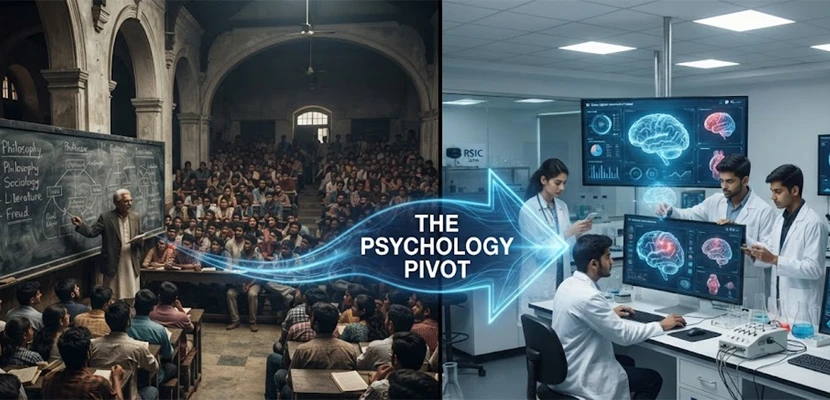
However, as clinical research, psychiatric care, neuroimaging technologies, and corporate analytics demand higher quantitative literacy and biological grounding, this traditional humanities model faces scrutiny. Students aiming for competitive international careers are driving what is known as the “psychology pivot.” This shift favors the scientific rigor of a BSc Psychology over the descriptive breadth of a Bachelor of Arts.
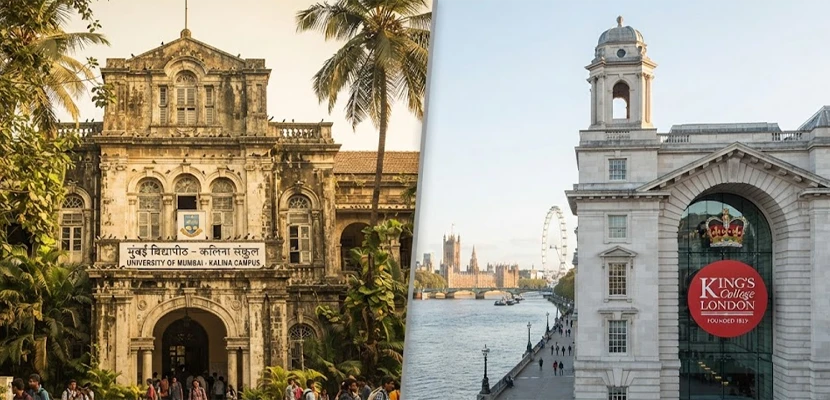
This academic transition is exemplified by the King’s College-Directed BSc offered in India at Russell Square International College. Taught at its modern campus in Juhu, Mumbai, this program represents an academic model that delivers an undergraduate degree from the University of London under the direct academic direction of King’s College London.
By aligning its curriculum with the world-leading Institute of Psychiatry, Psychology & Neuroscience (IoPPN), this program offers a rigorous alternative to standard local undergraduate degrees.
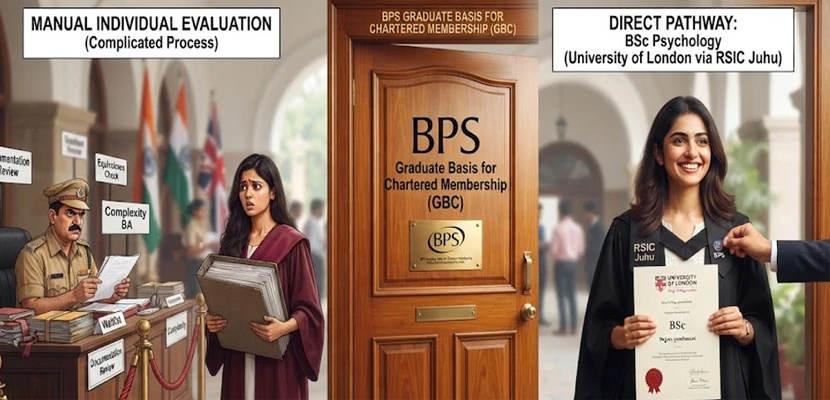
Evaluating this international BSc against the traditional curriculum of local psychology colleges in Mumbai reveals systemic differences in scientific depth, quantitative training, clinical preparation, and global professional mobility.
| Structural Dimension | King’s College-Directed BSc (via RSIC) | Traditional Local BA Psychology (Mumbai University) |
| Degree Classification | Bachelor of Science (BSc Honours) under UK FHEQ Level 6 | Bachelor of Arts (BA) under local Humanities Faculty |
| Academic Oversight | King’s College London (IoPPN) & University of London | Local Board of Studies & University Affiliation |
| Regulatory Validation | Direct alignment with the British Psychological Society (BPS) | Requires individual equivalence evaluation by foreign bodies |
| Core Epistemology | Empirical, neuroscientific, quantitative, and experimental | Historical, qualitative, theoretical, and descriptive |
| Research Project Standard | Compulsory 30-credit original empirical study (8,000 words) | Basic library dissertation or simple practical logbooks |
| Statistical Integration | Continuous coding, ANOVA, and multivariate data analysis | Introductory statistics restricted to final-year modules |
Institutional Foundations: King’s College London vs. Indian State Universities
The academic value of any undergraduate degree is shaped by the research and institutional expertise that guides its curriculum. The King’s College-Directed BSc delivered through Russell Square International College derives its academic foundation directly from King’s College London. This institution ranks among the top 35 universities globally and is celebrated for its historic contributions to science.
The program’s curriculum is developed and updated by the Institute of Psychiatry, Psychology & Neuroscience (IoPPN), which is ranked second globally for psychiatry and psychology. This connection ensures that the curriculum is enriched by current, peer-reviewed clinical trials and psychiatric research.
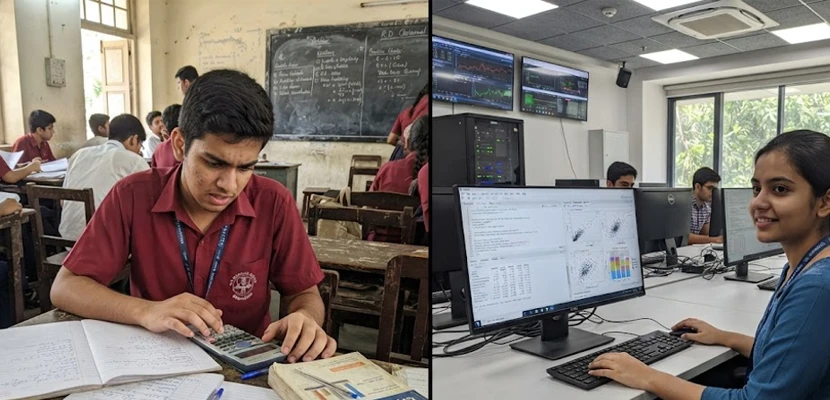
Undergraduate students at the Juhu campus of Russell Square International College engage with a curriculum designed by leading research scientists. This framework integrates clinical case studies, psychopharmacological research, and neuroimaging studies directly into the syllabus.
Conversely, the academic foundation of a local BA Psychology in standard Indian state systems, such as Mumbai University, is shaped by a localized Board of Studies working within a humanities-oriented regulatory framework. While these programs introduce students to foundational psychological concepts, the curricular updates are often limited by administrative inertia and a lack of integration with active clinical research centers.
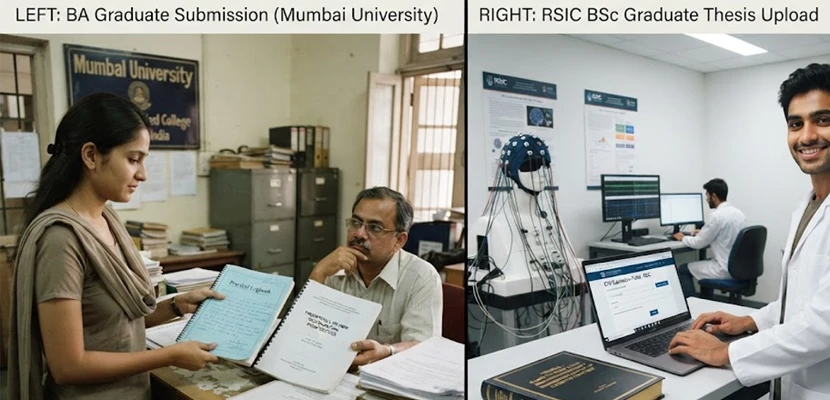
Furthermore, the structural setup of psychology colleges in Mumbai often involves large student cohorts, which can limit direct academic mentorship. At Russell Square International College, the educational delivery model maintains small batch sizes to encourage personalized instruction and student-teacher interaction.
Because the faculty members are trained and approved by the University of London, the pedagogical standards remain consistent with those delivered on campus in the United Kingdom. This setup bridges the gap between local learning and global academic expectations, providing a structured environment that supports rigorous scientific training.
Professional Mobility: Understanding BPS GBC and Global Accreditations
For students aiming to build a global career as a clinical, educational, forensic, or occupational psychologist, the accreditation status of their undergraduate degree is a vital factor in their professional mobility.
In the United Kingdom and many Commonwealth nations, the regulatory standard for practicing psychology is managed by the British Psychological Society (BPS). To qualify for accredited postgraduate studies or doctoral residency programs, an applicant must possess the Graduate Basis for Chartered Membership (GBC).
The King’s College-Directed BSc delivered in Mumbai offers a direct pathway to this crucial credential. Students who register for this degree and graduate with at least lower second-class honors (a 2:2 classification), while successfully passing their empirical research project, are eligible for GBC.
This pre-approved status bypasses the complex, expensive, and manual individual assessments that foreign graduates typically undergo.
| Professional Benchmark | King’s College-Directed BSc Pathway | Traditional Local BA Psychology Route |
| BPS GBC Eligibility | Direct pathway upon graduation with a minimum 2:2 classification and passing the core empirical project | Requires a manual overseas evaluation, often resulting in a rejection due to credit imbalances |
| Psychology Content Ratio | Guaranteed to exceed 50% core psychology across 360 credits | Often falls below 50% due to mandatory non-major humanities papers |
| Core GBC Area Coverage | Pre-approved coverage of all eight core psychological domains | Fragmented coverage; requires manual matching of syllabus documents |
| Postgraduate Transition | Direct entry into BPS-accredited MSc and Doctoral programs globally | Frequently requires a year-long, expensive UK-based conversion course |
| Empirical Thesis Validation | Verified 8,000-word quantitative project | Often absent, lacking, or non-empirical in nature |
For a graduate of a standard local BA Psychology, establishing global equivalence is a challenging process. The BPS requires that any international degree evaluated for GBC must be equivalent to a British bachelor’s degree with a minimum 2:2 grade, consist of at least 50% psychology content, include an empirical project, and cover the eight core domains of psychological science.
Because Indian BA degrees are often structurally diluted with mandatory humanities courses, they frequently fail these criteria. As a result, local BA graduates are often forced to complete a year-long BPS-accredited postgraduate conversion course in the UK.
Comparative Overview: BSc vs. Local BA
| Key Comparison Metric | King’s College-Directed BSc (via RSIC) | Traditional Local BA Psychology |
| Awarding Body | University of London (under academic direction of KCL) | Local State or Autonomous Universities |
| FHEQ Academic Level | Level 6 (aligned with global STEM standards) | Classified under domestic Humanities/Social Sciences |
| Statistical Software Training | Advanced data modeling and computer analysis tools | Minimal; focus on manual calculations |
| Empirical Thesis Requirement | Compulsory 30-credit, 8,000-word original research dissertation | Basic literature review or simple practical logbooks |
| BPS GBC Pathway | Direct, pre-approved compatibility (upon achieving a 2:2) | Manual individual evaluation required; high risk of rejection |
| Curricular Core Influence | Enriched by world-leading psychiatric research from the IoPPN | Standard domestic academic syllabus |
| Global Graduate Mobility | Direct entry to competitive international MSc and PhD programs | Often restricted to local postgraduate pathways |
| Corporate Placement Value | High; applicable in UX Research, Talent Analytics, and Biotech | Limited to generalist HR and introductory administrative roles |
This comprehensive synthesis shows that the King’s College-Directed BSc delivered at Russell Square International College is not just an alternative to a local BA Psychology—it is a fundamentally different approach to the study of the mind.
By treating psychology as an empirical life science, providing direct pathways to global professional accreditations, and grounding students in advanced clinical and neuroscientific research, this program equips the next generation of behavioral scientists to operate at the cutting edge of their discipline.

Conclusion and Strategic Recommendations
The comparative analysis detailed in this report points to a clear conclusion: for students aiming to operate at the forefront of clinical psychology, neuropsychology, cognitive research, or behavioral data analytics, the traditional, humanities-bound local BA Psychology is no longer the most strategic option.
While a local BA remains a viable, low-cost path for those seeking a general introduction to the humanities, its qualitative focus, lack of quantitative rigor, and regulatory barriers create significant hurdles for students with global professional aspirations.
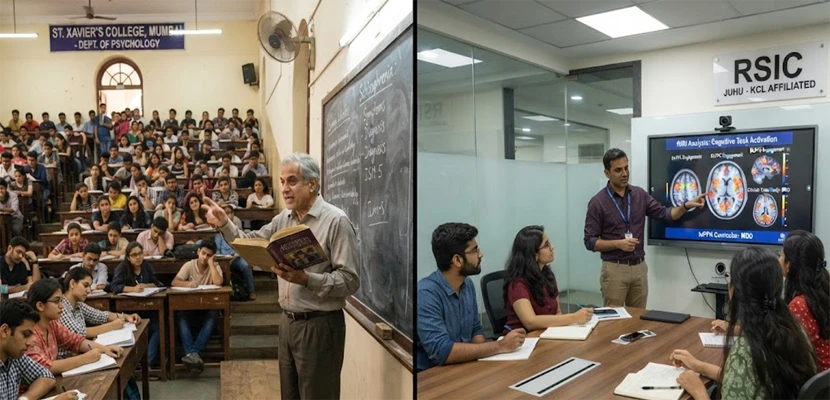
By choosing the King’s College-Directed BSc at Russell Square International College, students make a strategic choice that positions them for success in a competitive, global field.
The program’s rigorous scientific curriculum, direct alignment with BPS GBC standards, and deep integration with the world-leading clinical research of the IoPPN provide an elite foundation for future professional development.
Through its state-of-the-art campus in Juhu, expert faculty, and personalized academic support, Russell Square International College offers Indian students a unique opportunity to earn a world-class international degree while staying grounded in their home environment.
For parents and students evaluating their higher education options, investing in the BSc Psychology Course in Mumbai at RSIC represents a commitment to academic excellence, global mobility, and long-term professional success.