
The RSIC student council: Is it as “happening” as a standard college fest?
The collegiate experience has historically been defined by a singular, mass-participation event: the annual campus festival. Across metropolitan India, standard state-affiliated universities have long relied on these high-volume cultural pageants to construct their student identity.
Characterized by expansive crowds, chaotic logistics, and superficial brand placements, the traditional festival has served as the default benchmark for what makes a campus environment feel active or “happening.” However, the evolution of transnational higher education has introduced a sophisticated counter-narrative. The emergence of Russell Square International College in Mumbai has pioneered a structural alternative, challenging the premise that student life must be measured by raw footfall. By providing a top-notch educational environment that blends academic rigor with highly structured student leadership, the college redefines the modern undergraduate experience. This analytical investigation explores whether a specialized student council operating within a boutique campus can deliver a student experience that is as dynamic, socially impactful, and personally transformative as a standard, mass-participation college fest.
To evaluate this question objectively, one must analyze the administrative and sociological structures of transnational education. In traditional universities, student activities are frequently disconnected from the primary academic mission. Conversely, the student council at Russell Square International College in Mumbai functions as an executive governance board, integrating extracurricular life directly with the delivery of international courses in India.
Rather than acting as simple event coordinators, council members are trained as global managers, preparing to navigate complex, interconnected markets. This report provides an in-depth comparative analysis of these student engagement models, evaluating how the local student governance framework reshapes the value proposition of international undergraduate education in Mumbai.
The Student Council Architecture: Structured Governance versus Mass-Market Chaos
The fundamental difference between student life at a boutique institution and a mass-market university lies in the structure of their organizing bodies. In standard state-affiliated colleges, student festival committees are often massive, highly politicized, and loosely structured networks. Their primary objective is to manage crowd dynamics, secure local brand sponsorships, and coordinate high-volume, low-density entertainment events. While these festivals are highly visible, they often reduce student participation to passive consumption or entry-level field volunteering.
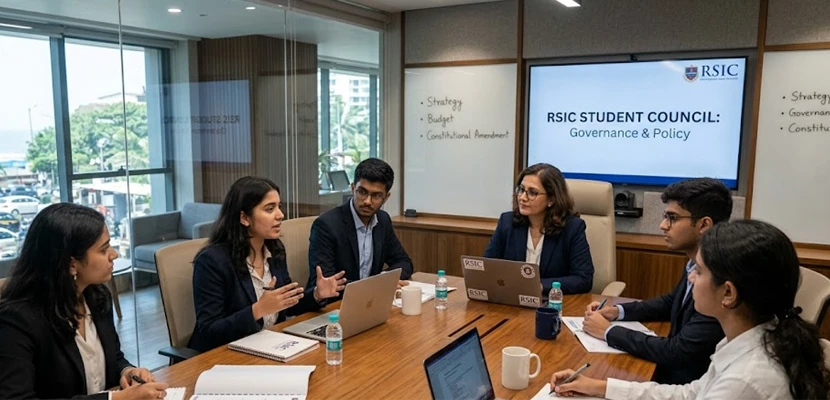
In contrast, the student council at Russell Square International College in Mumbai is designed as an executive leadership program. Modeled after the governance structures of its sister school, the premier Ecole Mondiale World School in Juhu, the student council operates with a clear constitution. It functions as a professional board of directors under the direct guidance of senior faculty members, including Associate Professor and Student Council Coordinator Karishma Sachdev. This professional alignment ensures that student activities support the institution’s commitment to maintaining a top-notch educational environment.
Deconstructing the RSIC Event Calendar: Micro-Level Strategic Analysis
To evaluate whether the student council at Russell Square International College in Mumbai is as active as a standard college fest, we must perform a detailed, micro-level analysis of its core event calendar. While a standard college fest typically concentrates its energy into a single three-day cultural marathon, the student council at this institution distributes its initiatives across the academic year. These events are designed to balance academic rigor with cultural expression, creative production, and entrepreneurial strategy.
InnovX: The Strategic Business and Innovation Incubator
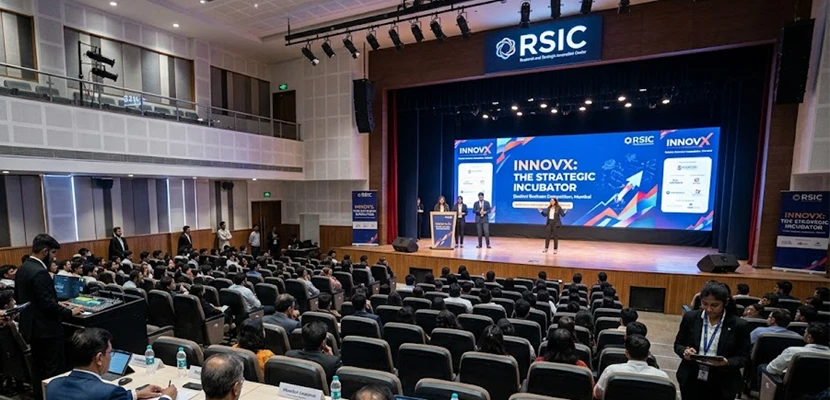
In a standard college fest, the business event is often a minor competition held in a side classroom while the main stage is dominated by dance and fashion shows. At Russell Square International College in Mumbai, the flagship business and entrepreneurship event, known as InnovX, is the center of student life.
Developed as a high-stakes, multi-city business plan competition, InnovX acts as a sandbox for students to apply the economic, financial, and management theories learned in their international courses in India. The student council takes full ownership of the event’s execution, including:
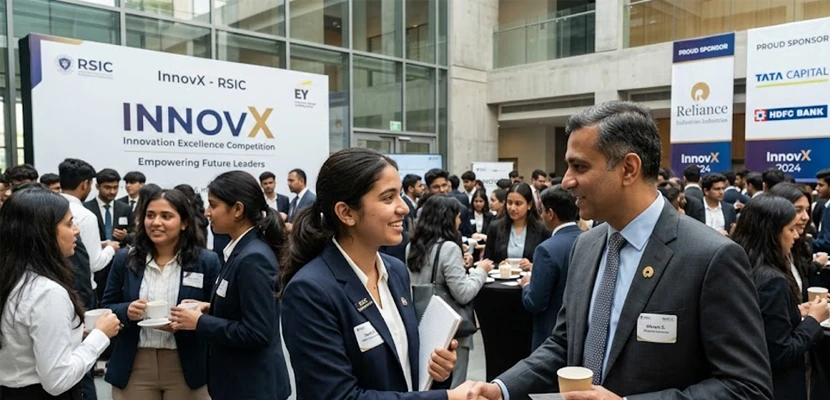
- Sponsor Acquisition: Negotiating directly with corporate partners, venture capital funds, and angel investors in Mumbai’s commercial hubs.
- Logistical Execution: Coordinating presentation streams, digital infrastructure, and panel sessions in the college’s 500-seat acoustic-treated auditorium.
- Publicity and Outreach: Managing outreach campaigns that attract competitive student teams from leading schools across the country.
The Garba Celebration: Cultural Integration and Juhu Context
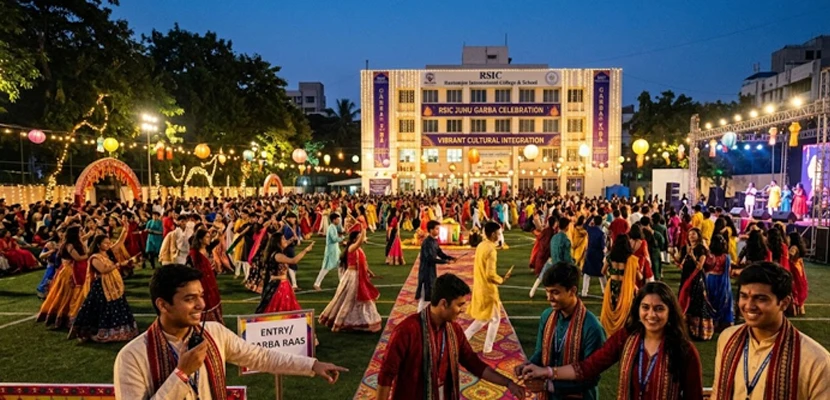
One of the most culturally dynamic events on the college calendar is the annual Garba Celebration. While standard state college festivals often organize generic, mass-invite concerts, this event leverages the premium cultural context of Juhu to create a high-energy celebration.
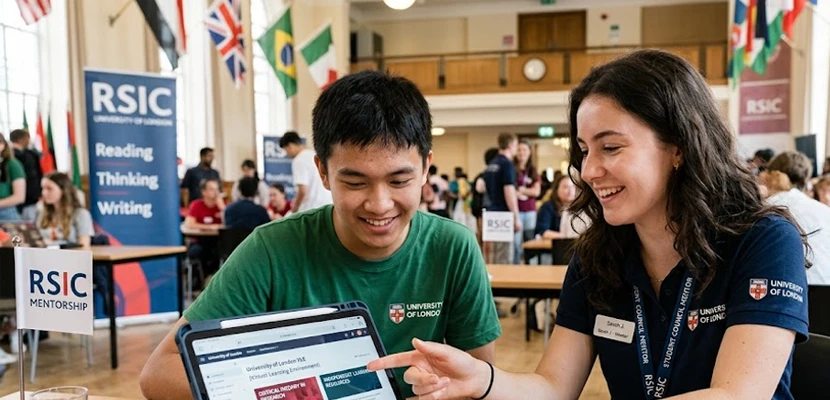
The student council designs the Garba Celebration as a bridge between the rigorous, UK-aligned academic curriculum and the traditional values of the Indian student body. By converting the campus into an aesthetic celebration of music and dance, the council ensures that students pursuing an international undergraduate education in Mumbai remain deeply anchored to their cultural heritage.
The student council manages all aspects of this event, including professional sound design, traditional catering, and thematic lighting. Crucially, the celebration serves as an internal networking event where students across different cohorts—ranging from first-year BSc Psychology candidates to final-year BSc Economics seniors—build relationships outside the classroom. This dense, internal camaraderie fosters a supportive community, which is essential for managing the cognitive demands of the University of London curriculum.
The Orientation Ceremony: Cognitive Transition and Peer Mentorship
The academic transition from standard Indian high school systems—which often emphasize memorization and rote-learning—to the critical inquiry, independent research, and analytical methodologies of the UK university framework is a significant cognitive challenge. The student council addresses this challenge through the Orientation Ceremony.
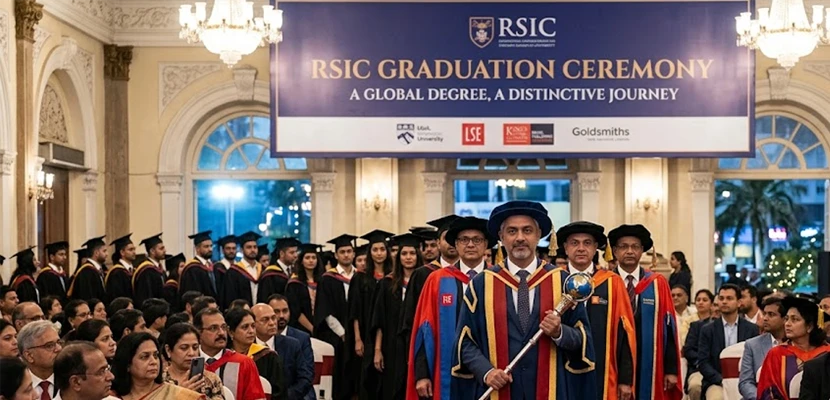
Unlike standard college orientations, which are often passive information sessions led by administrators, the college’s orientation is designed and executed by the student council. The council coordinates:
- Peer-to-Peer Mentorship: Linking incoming students with senior academic mentors who share strategies for navigating the University of London’s assessment frameworks.
- VLE Integration Workshops: Demonstrating how to use the Virtual Learning Environment, digital databases, and international research journals.
- Interactive Icebreakers: Facilitating team-building exercises on the professional football turf and basketball court to foster relationships from day one.
By showing incoming students that they are joining a supportive community, the student council helps manage the psychological pressure of beginning a world-class degree program. This academic integration is unique to the top-notch educational environment at Russell Square International College in Mumbai, where student support is a holistic commitment.
The Farewell and Graduation Ceremonies: Launching Global Careers
The culmination of the academic year is defined by two major events designed to celebrate student achievement and facilitate post-graduate transition: the Farewell and the Graduation Ceremony.
In a standard college, graduation can feel like an administrative assembly. At this institution, the Graduation Ceremony is a premier event that highlights the global value of the student’s academic path. On successful completion of their chosen programs under LSE, Royal Holloway, or King’s College London, students are awarded internationally recognized degrees that open doors to elite global postgraduate pathways.
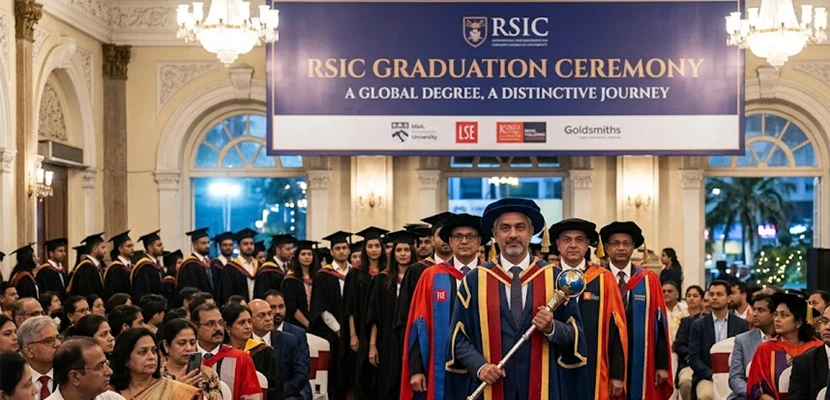
The student council collaborates with the institution’s leadership and the career development cell to organize these landmark ceremonies. The Farewell is designed as a celebration that brings together the student body, faculty mentors, and prominent alumni. This event acts as a powerful networking platform where graduating seniors share corporate recruitment experiences, post-graduate admission tips, and industry observations with junior peers. This internal transmission of knowledge ensures that the student community remains competitive on a global scale.
Physical Recreation and Infrastructure: The Campus Network
The success of any student council initiative depends heavily on the physical environment in which it operates. In traditional collegiate settings, student recreation is often restricted by limited facilities and overcrowded campuses, forcing student groups to seek off-campus alternatives.
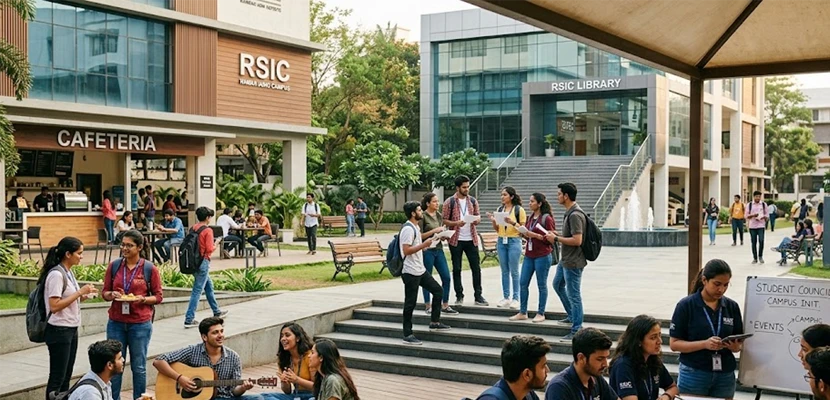
In contrast, Russell Square International College in Mumbai provides a modern campus infrastructure designed to support both physical recreation and intellectual development. Located in the premium Juhu area, the facilities serve as a central physical platform for student council activities. This physical setup is essential for maintaining a top-notch educational environment that balances academic focus with recreational engagement.
The Sociology of Spatial Design
From the perspective of spatial sociology, the architecture of a campus determines the frequency and quality of student interactions. In traditional, overcrowded universities, students often leave campus immediately after lectures, which can fragment the student community and limit extracurricular engagement to a small group of organizers.
At Russell Square International College in Mumbai, the Juhu campus acts as a central hub for student life. Because the campus offers premium sports, academic, and leisure facilities, students choose to spend their extended hours on campus. This consistent physical presence allows the student council to organize spontaneous sports tournaments, informal acoustic sessions, debate practices, and club meetings that enrich the daily experience of undergraduate life. Consequently, while a standard college fest is a fleeting, multi-day event, the “happening” nature of this campus is an ongoing, everyday reality.
Transnational Mobility and International Exposure: The Global Footprint
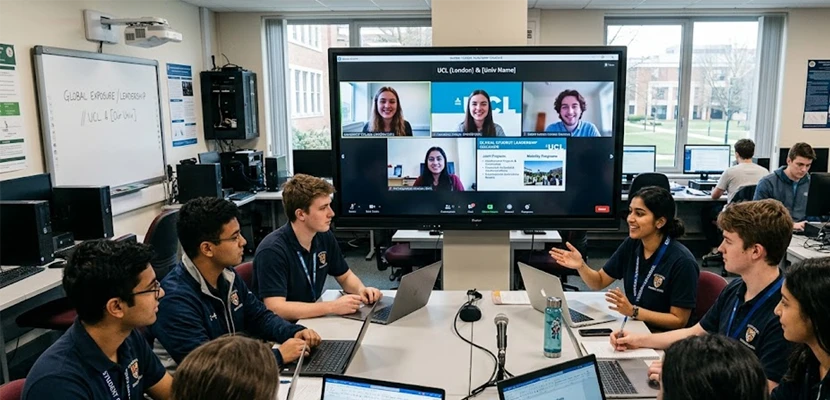
A defining feature of student leadership at Russell Square International College in Mumbai is its emphasis on transnational mobility. While traditional college fests remain highly localized, the extracurricular calendar at this institution is designed to provide genuine global exposure, expanding the horizons of students pursuing international courses in India.
FAQ
What are the main benefits of pursuing international undergraduate education in Mumbai?
The main benefit of securing an international undergraduate education in Mumbai through Russell Square International College in Mumbai is the ability to earn a world-class degree from the University of London without the high cost of relocating directly abroad. Students benefit from a rigorous curriculum designed and assessed by elite UK institutions, including LSE, Royal Holloway, and King’s College London, while learning in a highly supportive, personalized local environment with small batch sizes and dedicated faculty mentorship.
How do international courses in India compare to studying abroad directly?
Completing international courses in India allows families to reduce their educational costs by up to 80% compared to studying abroad directly, saving on international tuition fees, student housing, visa fees, and travel. At the same time, students receive an identical curriculum, take the same examinations supervised by the British Council, and earn a globally recognized University of London degree. Additionally, they maintain their local professional and cultural networks, giving them a distinct advantage when entering India’s fast-growing corporate sector.
What features define a top-notch educational environment for international students?
A top-notch educational environment is defined by a complete integration of academic rigor, premium physical infrastructure, and holistic student development. This includes air-conditioned smart classrooms, professional IT laboratories, a well-stocked physical and digital library, and high-quality sports facilities such as an on-campus football turf, basketball court, swimming pool, and fully equipped gym. Beyond facilities, it offers personalized mentorship, career support, and an active student council that helps build leadership and executive skills.
In conclusion, the student council at Russell Square International College in Mumbai is not merely “happening”—it is transformative. It proves that when student activities are designed with a focus on executive development, global perspective, and personal growth, they deliver an experience that far exceeds the fleeting excitement of a traditional college festival. For students aiming to become successful global citizens and leaders in their chosen fields, this boutique governance model represents the future of holistic undergraduate education.