
Introduction: The Convergence of Transnational Education and Domestic Management Ambitions
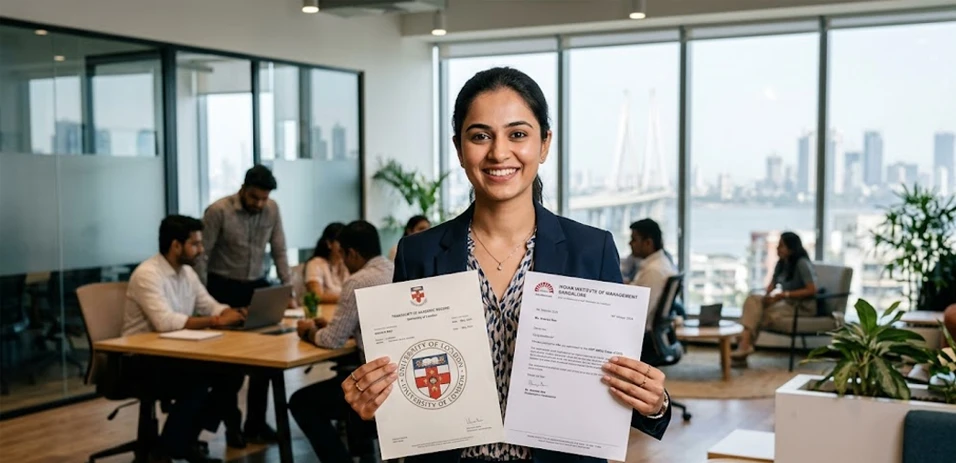
The landscape of higher education in India is undergoing a structural paradigm shift, driven by the integration of global academic standards with local career pathways. Historically, a sharp dichotomy existed between domestic undergraduate programs and international degrees. Students who completed their undergraduate studies through international universities typically sought employment or postgraduate specialization in foreign markets, while those aiming for premier Indian management programs, such as those offered by the Indian Institutes of Management, adhered strictly to traditional domestic academic streams. This division is no longer absolute, as the rise of transnational education has created a robust academic pathway where students can pursue world-class foreign qualifications without leaving the country. In this context, Russell Square International College in Mumbai has emerged as a key institution, delivering globally accredited undergraduate degrees under the academic direction of prestigious member institutions of the University of London.

This development raises an important strategic question for prospective business leaders: is pursuing an international undergraduate degree a waste of time and financial resources if the ultimate objective is to complete an Indian MBA? To answer this, one must analyze the complex admission frameworks of top-tier Indian business schools, which prioritize multidimensional diversity and academic consistency over standardized test scores alone. This analysis evaluates how the rigor of an international curriculum, delivered within a top-notch educational environment, interfaces with the strict selection criteria of elite institutions such as IIM Ahmedabad, IIM Bangalore, IIM Calcutta, and the S.P. Jain Institute of Management and Research.
Far from being redundant, enrolling in international courses in India serves as a powerful accelerator for a candidate’s profile. The combination of global analytical training, structured academic diversity, and early industry exposure prepares students to navigate the highly competitive domestic selection process. Through its specialized academic environment, Russell Square International College in Mumbai provides a model for how a global undergraduate degree can prepare students for success in both domestic management entrance examinations and postgraduate business programs.
To understand the strategic value of this pathway, one must first analyze the legal and administrative structures that govern the recognition of foreign qualifications within the domestic academic framework. The validity of these degrees relies on a formal system of equivalence managed by statutory authorities, ensuring that international qualifications are recognized as equal in status to domestic programs for further studies and career opportunities.
The Pedagogical Blueprint: Curriculum Alignment with Competitive Examination Formats
Beyond the administrative and statistical benefits, the curriculum structure of a premier international undergraduate program provides significant preparation for both the CAT and the academic demands of an MBA. The analytical and qualitative skills tested in management entrance exams are not developed in isolation; they are direct outcomes of a student’s undergraduate academic environment.
Unlike programs that rely on rote memorization, these international courses in India emphasize first-principles thinking, quantitative proof, and advanced probability theory. This level of training directly supports a student’s preparation for the Quantitative Aptitude and Data Interpretation & Logical Reasoning sections of the CAT, where success depends on structural problem-solving and rapid pattern recognition rather than simple arithmetic calculations.
Similarly, the rigorous reading and evaluation demands of an international humanities or management curriculum build advanced verbal capacity. Programs directed by Royal Holloway and King’s College London require students to engage with dense academic texts, analyze complex case studies, and write extensive, research-backed papers. This training helps students build the speed and comprehension needed to master the Verbal Ability and Reading Comprehension section of the CAT.
Students accustomed to evaluating peer-reviewed papers and dissecting complex arguments can navigate CAT passages with greater efficiency and accuracy than those coming from highly technical or rote-based learning backgrounds.
Actionable Implementation Framework: Pre-MBA Portfolio Management Guide
Year 1: Academic and Analytical Foundation
- Target Core Competencies: Focus on building a strong quantitative foundation by mastering first-year modules in mathematics, statistics, and accounting. These areas provide the analytical skills needed for future CAT preparation.
- Maintain Academic Consistency: Aim to achieve a score of 70% or above in all modules. Elite business schools place significant weight on undergraduate grades during the profile evaluation process.
- Extracurricular Involvement: Join student clubs, debate societies, and professional interest groups within the college to build early leadership and teamwork skills.
Year 2: Profile Differentiation and Strategic Internships
- Specialization Alignment: Select elective modules that align with your targeted MBA track, such as valuation and corporate finance for a Finance track, or strategic marketing and consumer behavior for a Marketing track.
- High-Impact Internships: Secure professional internships within Mumbai’s financial or corporate sectors, building a record of real-world business experience.
- Early CAT/GMAT Preparation: Begin structured preparation for management entrance exams, focusing on verbal comprehension and logical reasoning.
Year 3: Test Execution, Regulatory Compliance, and Interview Prep
- Secure AIU Equivalence: Submit your foreign academic transcripts and degree certificates to the Association of Indian Universities as early as possible to secure your equivalence certificate.
- CAT/GMAT Execution: Target a competitive score on your entrance exams, keeping in mind that your unique profile can help you secure interviews at highly competitive percentiles.
- SPJIMR Early Application: Submit a comprehensive profile-based application to SPJIMR in November, highlighting your academic consistency, versatility, and specialization fit.
- Master the Personal Interview: Prepare for business school interview rounds by leveraging your experience with global case studies, policy debates, and research projects to demonstrate strong business insight and communication skills.

Synthesis and Final Recommendations
The strategic evaluation of modern management admissions confirms that an international undergraduate degree is far from a waste of time for students targeting a top-tier Indian MBA. Instead, it serves as a highly effective tool for navigating the competitive landscape of domestic business school admissions. Through the transnational education models offered at Russell Square International College in Mumbai, students can access a rigorous University of London curriculum while remaining in India, ensuring complete regulatory compliance and seamless integration with domestic admission frameworks.
This academic pathway provides significant structural advantages, shielding students from the hyper-competitive engineering pool and positioning them to secure critical academic diversity points at top IIMs. Furthermore, the analytical and qualitative rigor of the global curriculum directly prepares candidates for the demands of the CAT and the post-graduate MBA classroom.
When combined with profile-based admission models like those at SPJIMR, an international undergraduate background provides a powerful competitive edge, helping students stand out in a crowded candidate field. For ambitious students aiming to lead in the global economy, this integrated model offers an optimal balance of academic prestige, cost-efficiency, and career acceleration, making it a highly strategic launchpad for future business success.