
The leap from local Indian schooling boards to a world-class British degree structure is an exhilarating milestone. For ambitious students who have spent twelve years navigating the structures of Central Board of Secondary Education (CBSE), Indian School Certificate (ISC), or Higher Secondary Certificate (HSC), entering a globally recognized system is the ultimate goal. When pursuing this level of education through prestigious centers like Russell Square International College in Mumbai, you are not just changing your uniform or your campus—you are entirely rewiring how your brain processes, analyzes, and applies knowledge.

As a premier destination for international undergraduate education in Mumbai, Russell Square International College (RSIC) offers a gateway to prestigious programs. This includes degrees from the University of London (UoL) with academic direction from world-renowned institutions such as the London School of Economics and Political Science (LSE), Royal Holloway, King’s College London, and Brunel University. This provides access to elite, global learning without requiring you to leave home immediately.
However, moving from a system heavily driven by rote learning, predefined textbook answers, and high-stakes end-of-year exams to an interactive, application-based British model can cause major academic culture shock. The secret to surviving—and thriving during—this major transition lies in understanding how the two systems differ, mastering the art of independent study, and leveraging the resources of an elite international campus.
This comprehensive guide breaks down every element of transitioning to international courses in India. It maps out the academic shifts you will encounter and provides actionable, step-by-step strategies to turn initial confusion into top-tier academic success.
Deconstructing the Academic Shock: The Core Differences
To succeed in a UK-directed curriculum, you must first unlearn the hidden assumptions of your old school board. While CBSE, ISC, and state boards provide an incredibly strong foundation in mathematics, content volume, and discipline, their pedagogical approach is fundamentally different from a British framework.

The Structural Shift
In traditional Indian boards, the learning process is highly structured. Textbooks serve as definitive guides, and the primary objective is to absorb a vast body of knowledge and reproduce it accurately under exam conditions. Success is often determined by how thoroughly you can recall specific formulas, definitions, and structured essays.
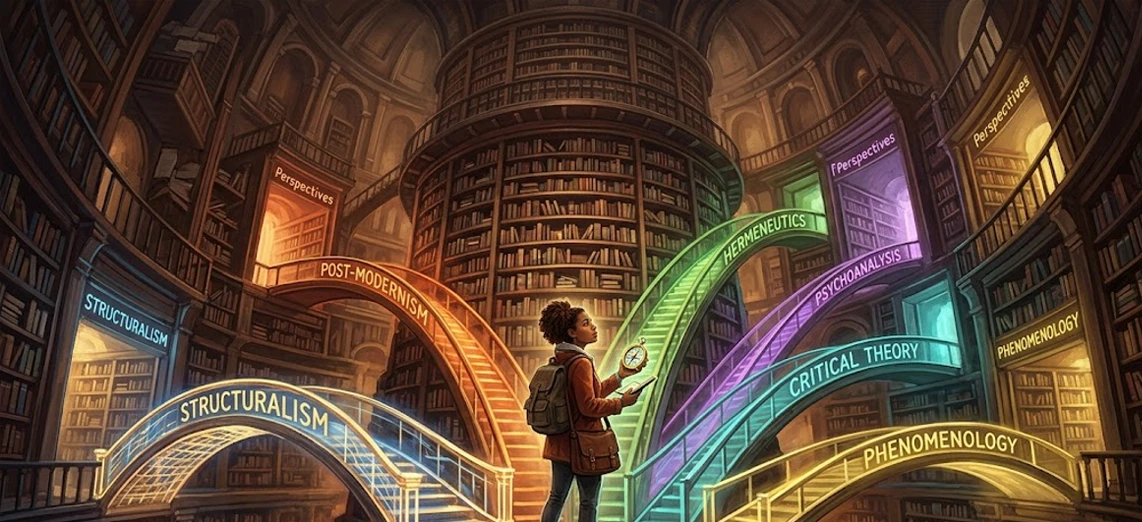
In contrast, a UK undergraduate curriculum—such as the University of London programs offered at Russell Square International College in Mumbai—treats textbooks as mere starting points. The core focus shifts from what you know to how you think about what you know.
Instead of memorizing a single correct answer, you are expected to look at competing theories, question assumptions, evaluate raw data, and build your own logical arguments.
Cultivating an Active Voice
One of the biggest hurdles for former CBSE, ISC, or HSC students is overcoming the habit of passive listening. In many traditional environments, questioning a teacher or expressing a dissenting opinion can feel disrespectful. In a UK curriculum, staying silent is often interpreted as a lack of engagement or preparation.
The faculty at Russell Square International College in Mumbai purposefully create spaces that welcome academic debate. Speaking up does not mean you have to be right every time. It means you are actively testing your ideas, defending your conclusions with evidence, and showing that you can think on your feet.
Academic Writing and Critical Thinking: The Ultimate Survival Tools
The absolute cornerstone of international undergraduate education in Mumbai is academic writing. Whether you are studying Psychology with King’s College London direction or Artificial Intelligence with Brunel University frameworks, your ideas are only as good as your ability to write them down clearly and persuasively.
The Anatomy of Critical Evaluation
Many Indian students enter college used to descriptive writing—explaining what a concept is, who invented it, and when it happened. While this background information is important, a UK curriculum values analytical and evaluative writing much more.
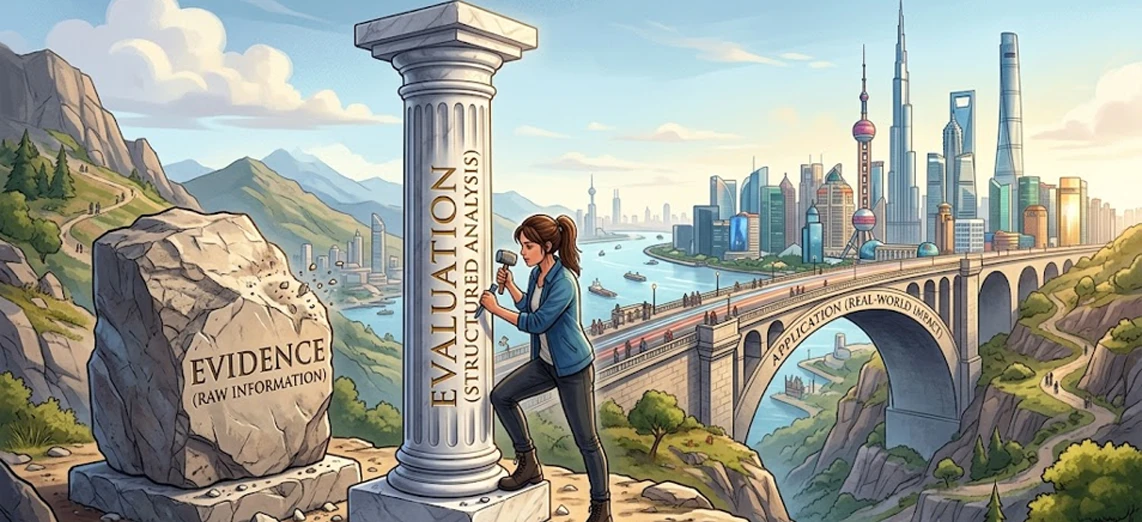
To move your writing from basic description to high-level critical analysis, consistently use the E-E-A Framework in every paragraph of your essays:
- Evidence: Introduce a clear concept, theory, or empirical data point from a credible academic source.
- Evaluation: Critique the evidence. What are its underlying limitations? Does it assume a perfect market environment? Is the sample size in the psychological study too small? Does it hold up across different cultures or time periods?
- Application: Apply this concept directly to the specific question asked in your assignment. Show exactly how this piece of puzzle helps solve the broader problem.
Navigating Plagiarism and Global Academic Integrity
In many local school boards, copying definitions verbatim from a textbook or memorizing model answers is standard practice. In an international curriculum, doing this without proper attribution is plagiarism—a severe academic offense that can carry heavy penalties.
When pursuing international courses in India, you must master academic referencing from day one. This means learning how to properly cite your sources using standard styles like Harvard, APA, or Chicago.
- Paraphrasing: Rewrite an author’s core argument completely in your own unique voice and sentence structure, while still giving them full credit with an in-text citation.
- Direct Quotations: Use quotation marks only when the exact phrasing is absolutely vital to your argument, and always include the precise page number.
Embracing the Ecosystem of Russell Square International College
Transitioning to a UK curriculum is not a solo journey. The ecosystem at Russell Square International College in Mumbai is designed from the ground up to support, challenge, and elevate students making this exact leap.
World-Class Academic Affiliations
The unique strength of RSIC lies in its deep integration with the University of London’s world-leading member institutions. The curriculum, study materials, and final examinations are set and graded by international faculty overseas, ensuring your degree commands respect globally.
Meanwhile, the local faculty in Mumbai provide essential daily mentorship, contextualizing complex international frameworks within the local business environment. This give you the best of both worlds: global standards with close, supportive guidance.
Holistic Development and Industry Immersion
Survival in a modern global career requires more than just academic knowledge. The transition from an Indian school board to an international undergraduate program is also about developing your professional identity.
Through structured industry immersion programs, skill-building workshops, and student-led initiatives, RSIC helps you transform your academic achievements into practical, real-world capabilities.

Conclusion
Moving from CBSE, ISC, or HSC to a UK-directed curriculum is undoubtedly a demanding transition, but it is also one of the most rewarding academic investments you will ever make. It forces you to move past passive consumption and encourages you to become an active creator of knowledge.
By choosing international courses in India through an institution like Russell Square International College in Mumbai, you give yourself an elite platform to develop these life-changing intellectual skills. The initial challenges of adapting to independent study, mastering analytical writing, and participating in fast-paced seminar debates will quickly become your greatest strengths.
This journey will fundamentally change how you interact with information, solve problems, and communicate your ideas. Embrace the challenge, trust the structured process, and step confidently onto the global stage. Your future as a sharp, globally minded leader starts right here.