
Why Choose RSIC Over a Global Business School Like SP Jain Global?
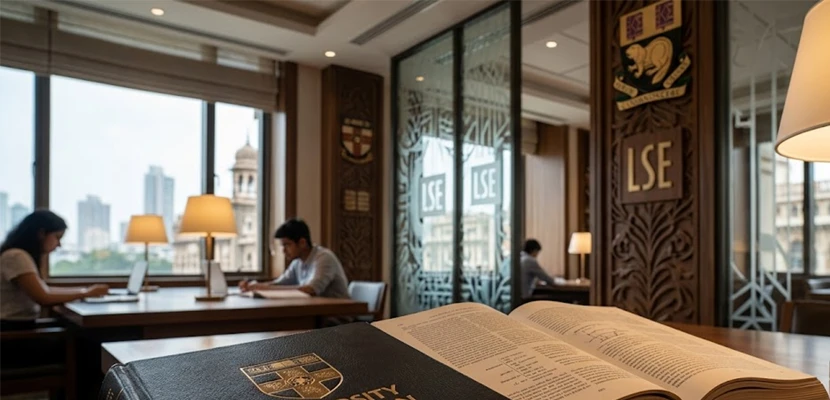
To understand the current dynamics of international undergraduate education in Mumbai, one must analyze the rise of international courses in India as a strategic response to the changing global workplace. Today’s corporations do not merely look for local degrees; they require graduates who possess exceptional quantitative skills, rigorous analytical training, and a global perspective. Consequently, the choice between different models of international education has become highly nuanced. On one hand, specialized private business schools like the SP Jain School of Global Management emphasize a proprietary, multi-campus rotation model across cities like Singapore, Dubai, and Sydney, designed for rapid corporate socialization. On the other hand, Russell Square International College in Mumbai offers a deeply academic alternative. It delivers programs academically directed by elite colleges of the University of London, such as the London School of Economics and Political Science (LSE), King’s College London, and Royal Holloway, providing a top-notch educational environment in Juhu.
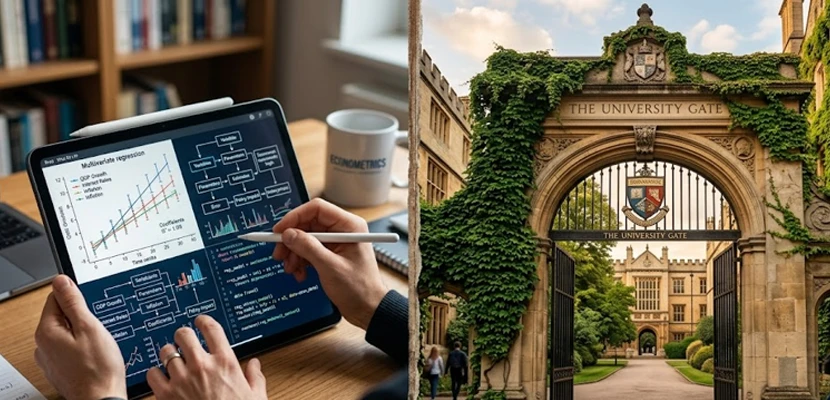
Evaluating these two models requires a careful analysis of academic quality, financial efficiency, and long-term career outcomes. The multi-campus rotation model is often marketed on the promise of global exposure. However, a closer look reveals that high-frequency relocation can introduce significant academic and personal disruptions. Conversely, the model of international undergraduate education in Mumbai provided by Russell Square International College in Mumbai focuses on academic stability, cognitive depth, and prestigious institutional pedigree.
By offering international courses in India that are designed and evaluated directly by LSE and other world-leading institutions, RSIC ensures that its students are evaluated against the highest global standards. This rigorous framework is delivered in a top-notch educational environment that balances academic challenge with personalized mentorship and holistic student development.
This report provides a detailed, multi-dimensional comparative analysis of these two models. It demonstrates why the academic rigor, financial efficiency, geographic stability, and prestigious pedigree of the University of London programs offered at Russell Square International College in Mumbai present a superior alternative to the proprietary business school model. Through a thorough evaluation of curriculum frameworks, pedagogical philosophies, financial structures, geographic advantages, and long-term postgraduate pathways, this analysis equips families and educational strategists with the critical insights required to make an informed decision.

Ultimately, it shows how pursuing international courses in India in a top-notch educational environment like RSIC prepares students to succeed in the most competitive academic and professional arenas worldwide.
Structural Comparison: Federated University vs. Proprietary Business School Models
At the core of the choice between these two institutions lies a fundamental difference in organizational structure and academic validation. Russell Square International College in Mumbai operates as a Recognized Teaching Centre of the University of London. This structural alignment connects RSIC directly to one of the world’s oldest and most prestigious federated university systems, founded in 1836. Under this system, the degree-awarding body is the University of London itself, while the academic direction—including the syllabus, course materials, and examinations—is managed directly by its elite member institutions, such as LSE, King’s College London, and Royal Holloway. This structure separates the delivery of education from its assessment, ensuring that the academic standards at RSIC remain identical to those on campus in the United Kingdom.

This model of international undergraduate education in Mumbai stands in sharp contrast to the proprietary model of specialized business schools like SP Jain. At SP Jain, the institution functions as a private, single-brand entity that designs, delivers, and assesses its own programs under its own accreditation, which is validated by the Tertiary Education Quality and Standards Agency (TEQSA) in Australia. While this model provides operational flexibility, it lacks the independent validation, academic heritage, and global prestige of a world-top-10 social science university. The academic credibility of a proprietary business school is tied directly to its corporate brand, whereas the credentials earned through Russell Square International College in Mumbai carry the enduring prestige of the University of London.

Deconstructing Academic Prestige and Pedagogical Rigor
The academic prestige of an undergraduate degree is rooted in its intellectual depth and the rigor of its pedagogical model. At Russell Square International College in Mumbai, this model is defined by the academic direction of the London School of Economics and Political Science (LSE), a world-leading institution for social sciences. LSE’s approach to social sciences is built on the belief that understanding business, finance, and management requires a deep grasp of economic theory, quantitative modeling, and analytical reasoning. This is reflected in the curriculum of the international courses in India offered at RSIC, which are designed to challenge students to think deeply and systematically.
This academic philosophy differs sharply from the vocational, case-study-heavy approach found in proprietary business schools. While business schools often focus on practical operations and the study of specific corporate histories, they can sometimes overlook the fundamental theoretical frameworks that explain why markets and organizations behave as they do. The LSE-directed programs at Russell Square International College in Mumbai bridge this gap by combining deep academic theory with rigorous quantitative training. This approach ensures that students do not just learn standard business recipes; they build the analytical tools needed to solve novel, complex problems across diverse industries.
The Rotation Illusion: Deconstructing SP Jain Global’s Multi-Campus Model
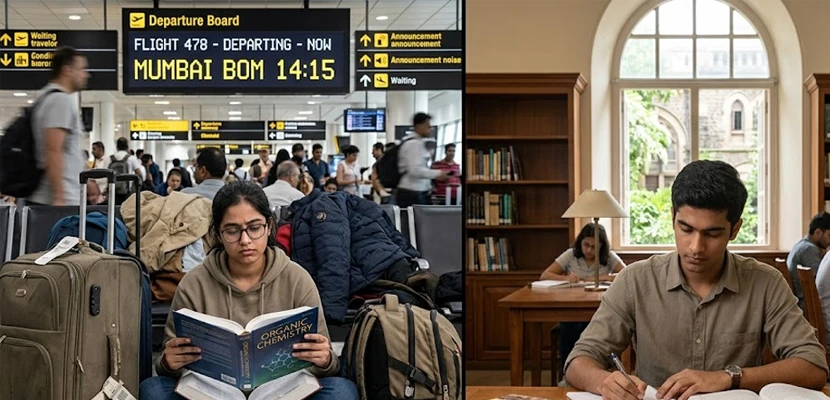
A key pillar of the appeal of specialized private business schools like SP Jain is the multi-campus rotation model, which typically promises students the opportunity to study in different global cities, such as Singapore, Dubai, and Sydney, over the course of their undergraduate degree. While this model is often marketed as a dynamic way to gain global exposure, a closer analysis of the operational, cognitive, and social realities of high-frequency relocation reveals significant trade-offs that can affect the overall quality of an international undergraduate education in Mumbai.
The first and most critical challenge of the multi-campus rotation model is the potential disruption of academic and cognitive continuity. Undergraduate education is a crucial developmental period where students must build deep conceptual frameworks, establish long-term academic relationships, and engage in sustained research. When a student is relocated to a new country and a new campus environment every nine to twelve months, this developmental process is continuously interrupted. Every transition requires adjusting to new facilities, adapting to different local regulations, finding accommodation, and navigating cultural changes. Rather than focusing on deep academic inquiry, students must expend a significant portion of their time and energy on the logistics of relocation.
FAQ
What is the fee structure for Russell Square International College in Mumbai?
The fee structure for Russell Square International College in Mumbai consists of a one-time admission fee of ₹1,00,000, a refundable security deposit of ₹50,000, and annual tuition fees ranging from ₹3,00,000 to ₹5,00,000 depending on the selected University of London degree pathway. In addition to local tuition, students pay module registration fees directly to the University of London in British Pounds, averaging approximately £694 to £872 per module. This brings the total estimated cost for a complete three-year degree to approximately ₹22,00,000 to ₹25,00,000, which is highly cost-effective compared to specialized business schools.
Is a University of London degree earned at RSIC valid for master’s programs abroad?
Yes, a University of London degree earned at Russell Square International College in Mumbai is fully accredited, globally recognized, and highly regarded by elite graduate schools worldwide. Because the curriculum, assessments, and examination standards are designed and evaluated directly by lead colleges such as the London School of Economics (LSE) and King’s College London, graduates are highly competitive for master’s programs at institutions like Harvard, Oxford, Cambridge, and LSE.
How do the fees of international courses in India compare between RSIC and SP Jain Global?
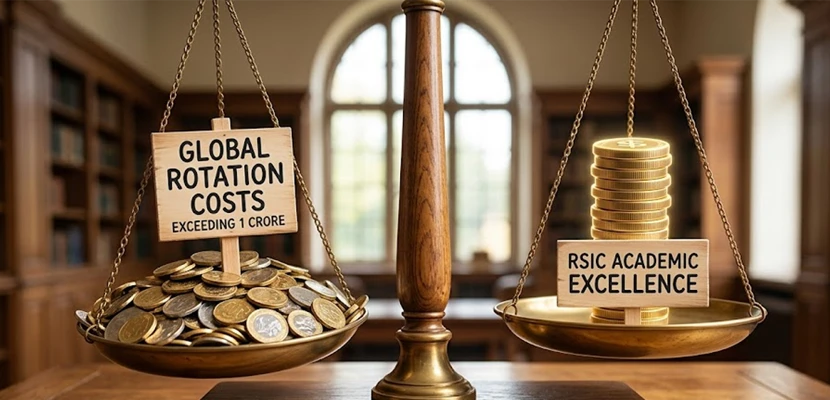
The total financial commitment for international courses in India through RSIC is significantly lower than the costs associated with SP Jain’s global programs. An undergraduate degree at RSIC costs approximately ₹22,00,000 to ₹25,00,000 in total. In contrast, SP Jain’s Global BBA tuition alone ranges from ₹84,52,000 to ₹94,63,000. Once international accommodation, visas, mandatory insurance, and multi-campus travel are factored in, the total cost for SP Jain Global can exceed ₹1.3 Crore to ₹1.5 Crore.
Conclusion
This comparative analysis demonstrates that the choice between Russell Square International College in Mumbai and a global business school like SP Jain involves a fundamental decision regarding academic philosophy, financial optimization, and long-term career planning. While proprietary business schools offer high-frequency international rotation, the academic rigor, cost-efficiency, and prestigious pedigree of the University of London programs at RSIC present a highly compelling alternative.
By choosing RSIC, students gain access to a world-class curriculum designed and evaluated by the London School of Economics and King’s College London, all within a supportive, top-notch educational environment in Juhu, Mumbai. This stable base allows students to develop deep quantitative and analytical capabilities, build strong connections within India’s financial capital, and avoid the disruptions associated with continuous international relocation.