
BSc Economics vs. Finance at RSIC: Which one opens more doors on Wall Street?
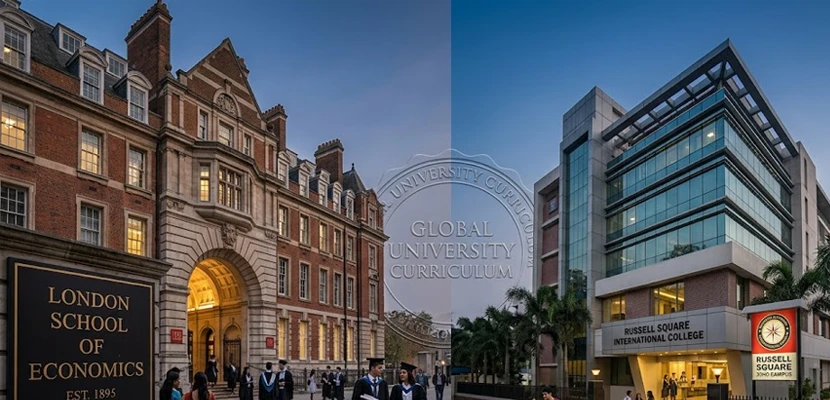
The architecture of global high finance has historically been defined by structural barriers, with elite investment banks, quantitative hedge funds, and private equity firms concentrating their recruitment efforts on a narrow cohort of elite target universities. Yet, the rapid globalization of capital markets and the adoption of standardized quantitative metrics have created a significant shift, enabling ambitious international candidates to compete directly for front-office roles in New York and London. At the forefront of this educational shift is Russell Square International College in Mumbai, an institution that has established itself as a premier destination for international undergraduate education in Mumbai. By delivering rigorous undergraduate programs awarded directly by the University of London under the academic direction of the world-renowned London School of Economics and Political Science (LSE), this institution has built a direct bridge between India and global financial centers.

For students navigating this top-notch educational environment, the choice between a BSc Economics and a BSc Finance represents a critical career decision. Both degrees provide high academic rigor, yet they cultivate distinct quantitative, theoretical, and practical skill sets that align with different divisions on Wall Street. Selecting the correct pathway at a premier BSc in Finance College in Mumbai or a leading Bsc in Economics College in Mumbai requires a deep understanding of how these academic disciplines are evaluated by global recruiters, how their technical components map to real-world financial tasks, and how the regional advantages of studying in India’s financial capital can be leveraged to secure highly competitive global roles.

Institutional Framework and the Global Target School Paradigm
The competitiveness of an international candidate on Wall Street depends heavily on the global recognition and academic weight of their undergraduate degree. Through its affiliation with the University of London, Russell Square International College in Mumbai provides students with access to a prestigious global curriculum designed, updated, and assessed entirely by the faculty of the London School of Economics and Political Science (LSE). LSE is globally recognized as an elite target institution, consistently ranked among the world’s top universities for finance, economics, and social sciences. Consequently, students enrolled in these international courses in India are evaluated using the same rigorous academic standards, grading rubrics, and examination structures as those studying on-campus in London.

This collaborative framework addresses a common challenge in international undergraduate education in Mumbai: the perceived variance in academic rigor between domestic programs and Western target universities. By offering a curriculum designed by LSE, Russell Square International College in Mumbai ensures its students possess a credential that is recognized globally by international recruiters, credential valuation services, and elite graduate schools. Rather than navigating a traditional domestic curriculum, students in this program complete coursework that is highly quantitative, analytically rigorous, and directly aligned with global standards.
The structural benefits of this model are particularly clear when analyzing how global investment banking divisions (IBD) and quantitative trading desks filter applicants. Recruitment systems often use automated filters to screen candidates based on GPA thresholds, quantitative course history, and institutional prestige. The University of London degree, backed by LSE’s academic direction, ensures that graduates can bypass these initial filters. This institutional structure is highly beneficial for both the BSc Economics and the BSc Finance pathways, which are delivered within a top-notch educational environment designed to produce globally competitive graduates.
Global Credential Recognition and the WES Pathway
For students pursuing international undergraduate education in Mumbai, a primary consideration is how global employers and graduate schools will evaluate their Indian credentials. To address this, the University of London degrees offered at Russell Square International College in Mumbai are structured to meet international standards.
When applying to US-based institutions or employers, international transcripts are typically processed through credential evaluation services like World Education Services (WES). WES converts international grading systems into standard US cumulative Grade Point Averages (GPAs). Because the academic direction of the programs at Russell Square International College in Mumbai is provided by LSE, the course structure, credit distribution, and testing rigorousness map directly to standard European and North American academic frameworks.
The WES ICAP (International Credential Advantage Package) provides a course-by-course evaluation that translates the rigorous British marks into US equivalent GPAs. The table below illustrates how standard Indian and British grading outcomes translate to the US system under typical WES conversions:
| UK/UoL Classification | Typical Numerical Range | US GPA Equivalent | Wall Street Recruitment Target Status |
| First Class Honours | 70% and above | 3.70 – 4.00 | High-priority target pool for elite investment banks and hedge funds |
| Upper Second Class (2:1) | 60% – 69% | 3.30 – 3.69 | Standard target pool for investment banking divisions and consulting |
| Lower Second Class (2:2) | 50% – 59% | 3.00 – 3.29 | Minimum threshold for corporate finance and commercial banking programs |
| Third Class / Pass | 40% – 49% | Below 3.00 | Non-competitive for structured front-office recruitment on Wall Street |
This standardized evaluation system ensures that graduates from this BSc in Finance College in Mumbai or Bsc in Economics College in Mumbai can present their academic records to global institutions with clarity and authority.
The LSE General Course and Study Abroad Pathways
A major institutional advantage for students at Russell Square International College in Mumbai is the opportunity to participate in the University of London and LSE study abroad programs, specifically the LSE General Course. The General Course is a year-long study abroad program that allows undergraduate students to spend their third year fully integrated into the campus community in London.
For students aiming for Wall Street, the General Course serves as a significant career accelerator. While studying in London, students gain access to:
- The full suite of LSE Careers services, including recruitment fairs, networking events, and mock interviews.
- Direct recruitment opportunities with global financial institutions based in the City of London, many of which maintain global hiring pipelines that connect to their New York offices.
- Special internship opportunities negotiated with organizations like The Intern Group, allowing students to gain valuable work experience alongside their studies.
- Guaranteed university accommodation in central London, providing a supportive environment for professional networking.
This pathway allows students to begin their studies in the supportive environment of Russell Square International College in Mumbai and complete their undergraduate experience in a global financial capital, building an international network that is highly valued by Wall Street recruiters.

Graduate School Placement and Professional Certifications
Another primary route to Wall Street for international graduates is pursuing advanced studies at top-tier international institutions. The analytical foundation of the UoL degrees at RSIC prepares students for competitive admissions processes at elite graduate programs, including those in the Ivy League and elite European business schools.
Graduates of Russell Square International College in Mumbai have successfully transitioned to prestigious postgraduate programs worldwide. The table below lists notable international placements of RSIC alumni for postgraduate studies:
| Country | Destination University | Notable Programs |
| United States | Harvard University, Brown University, UCLA, Boston University, University of Illinois | MBA, Master in Finance, MSc in Financial Engineering |
| United Kingdom | London School of Economics (LSE), Imperial College London, Queen Mary University | MSc Finance, MSc Finance & Economics, MSc Data Science |
| Europe | SDA Bocconi, HEC Paris, WHU Otto Beisheim | Master in International Finance, Master in Management |
| Australia | University of New South Wales (UNSW) Sydney | Master of Finance, Master of Applied Economics |
In addition to graduate school, many students choose to pursue professional certifications like the Chartered Financial Analyst (CFA) credential to further demonstrate their technical expertise. The BSc Finance curriculum aligns closely with the CFA Candidate Body of Knowledge, covering core topics like quantitative methods, equity valuation, fixed-income analysis, portfolio management, and derivatives. This alignment helps students prepare for these challenging exams while completing their undergraduate studies, enhancing their professional profile for competitive global recruiting.
Quantitative Finance, Algorithms, and Risk Management
For roles in quantitative research, algorithmic trading, and systemic risk management, quantitative proficiency is the primary hiring criterion. These positions require the ability to construct mathematical models that predict market movements, price complex derivative contracts, and manage portfolio risk under extreme volatility.
The BSc Economics pathway, with its strong emphasis on econometrics and statistical theory, is highly relevant for these technical roles. Students learn how to analyze large datasets, identify patterns, and build predictive models. This training is particularly useful for quantitative research and systematic macro strategies, where understanding structural economic relationships and policy dynamics is critical.
Conversely, the BSc Finance pathway provides specialized training in asset pricing models, financial engineering, and derivatives risk management. Students learn the mathematical foundations of option pricing, value-at-risk (VaR) modeling, and portfolio optimization. This quantitative training is directly applicable to structured products, equity derivatives trading, and credit risk analysis divisions.
Comparative Matrix: Academic and Professional Alignment
To assist students in choosing the appropriate academic track, the following comparative matrix summarizes the key components, skill requirements, and professional outcomes of the BSc Economics and BSc Finance programs at Russell Square International College in Mumbai:
| Evaluation Dimension | BSc Economics Program | BSc Finance Program |
| Core Intellectual Focus | Systemic efficiency, behavioral dynamics, market design, policy impact | Corporate efficiency, investment management, capital structure, asset pricing |
| Primary Quantitative Tools | Econometric packages, multivariate calculus, probability modeling | Excel financial modeling, valuation matrices, derivatives pricing engines |
| Workplace Culture & Pace | Analytical, research-driven, strategic, policy-oriented | Execution-oriented, client-facing, transactional, high-intensity |
| Average Weekly Hours (Analyst) | 55 – 65 hours (Macro Research, Asset Management) | 75 – 95 hours (Investment Banking, Corporate Advisory) |
| Core Technical Skills | Empirical modeling, hypothesis testing, econometric forecasting | Financial statement analysis, accounting proficiency, discounted cash flows |
| Valued Soft Skills | Complex written argumentation, research synthesis, conceptual thinking | Client presentation, transaction coordination, teamwork under pressure |
| Wall Street Recruitment Channels | Quantitative research, risk analytics, global strategy groups | Investment banking (IBD), leveraged finance, capital markets |
| Long-Term Career Horizons | Chief Economist, Portfolio Manager, Strategic Advisor | Managing Director, Private Equity Partner, Corporate CFO |

The Juhu Campus and the Mumbai Financial Advantage
The location of Russell Square International College in Mumbai, in the prominent neighborhood of Juhu, provides a strategic geographical advantage for students pursuing an international business education. Mumbai is the financial capital of India, housing key institutions like the Reserve Bank of India (RBI), the Bombay Stock Exchange (BSE), the National Stock Exchange (NSE), and the headquarters of major domestic and international financial institutions.
This proximity allows the college to deliver a highly practical education:
- Direct Industry Exposure: Students have regular access to internships, live research projects, and corporate collaborations with leading investment firms, banks, and multinational corporations based in Mumbai. This hands-on experience is critical for bridging the gap between classroom theory and real-world application.
- Distinguished Professional Network: The college regularly hosts guest lectures, financial modeling workshops, and mentorship sessions led by senior industry professionals, CFOs, and policy analysts. This professional interaction helps students build networks and gain insights into current market practices.
- Holistic Co-Curricular Culture: The Juhu campus supports active, student-led organizations like the Finance Club and the Debate Society. These student initiatives organize case study competitions, portfolio management challenges, and economic forums, helping students develop essential leadership and team-building skills.
By combining the academic standards of a globally recognized curriculum with direct access to India’s largest financial hub, the college creates a top-notch educational environment that prepares students to compete effectively in global markets.